Coaching Series: Dan Devine
- godcountryirish

- Jul 11
- 4 min read
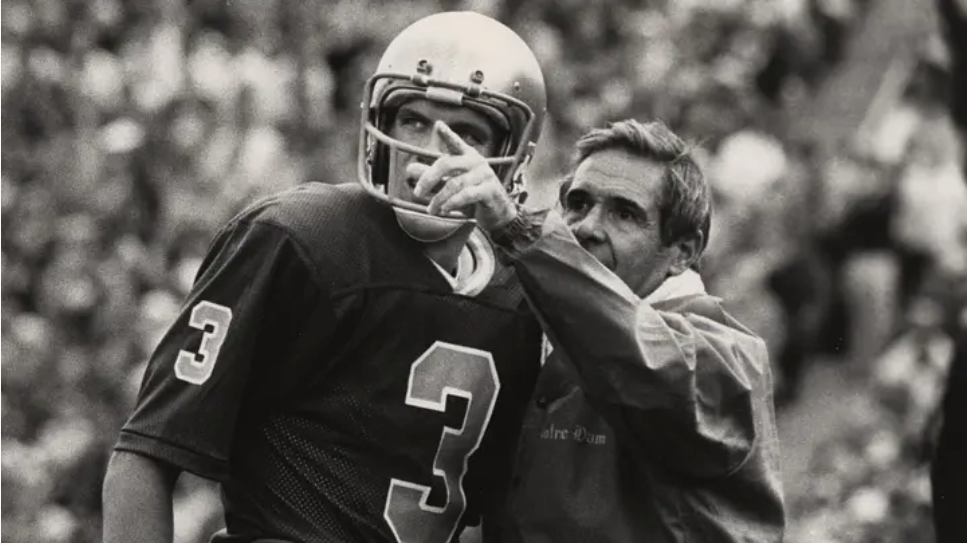
Fellow Notre Dame faithful, gather 'round for another chapter in the rich tapestry of Irish coaching legends. In a program defined by icons like Rockne, Leahy, Parseghian, and Holtz, Dan Devine often flies a bit under the radar—but make no mistake, his impact runs deep. The man who stepped into Ara Parseghian's formidable shoes delivered a national championship in 1977, posted one of the strongest winning percentages in school history, and left the program stronger, more integrated, and forever etched in golden-helmet glory.
From Wisconsin Roots to Coaching Stardom
Born Daniel John Devine on December 23, 1924, in Augusta, Wisconsin, Devine played quarterback at what is now the University of Minnesota Duluth. After a stint as a high school coach (where his teams went a perfect 16-0), he joined the Michigan State staff as an assistant during their national championship era in the early 1950s.
His head coaching journey began at Arizona State in 1955. In just three seasons, he compiled a sparkling 27-3-1 record, including an undefeated 10-0 campaign in 1957 that led the nation in scoring and total offense. From there, he built Missouri into a powerhouse from 1958 to 1970, going 93-37-7 with multiple bowl wins and consistent Top 20 rankings. A brief, tougher NFL stint with the Green Bay Packers (25-27-4) followed before Notre Dame came calling in 1975.
Steady Excellence with a Championship Peak
Devine inherited a program fresh off Parseghian's legendary run and faced sky-high expectations. Over six seasons (1975-1980), he went 53-16-1, among the best in school history. His teams appeared in four bowls (3-1 record), including back-to-back Cotton Bowls.
The crown jewel? The 1977 season. Led by a young Joe Montana and stars like Ross Browner, the Irish finished 11-1 and claimed the national title with a dominant 38-10 victory over previously unbeaten Texas in the Cotton Bowl. That year featured unforgettable moments: a dramatic comeback win over Houston, a gutsy road triumph at Clemson, and a statement victory over Miami.
Other highlights included the 1976 Gator Bowl win and the thrilling 1979 Cotton Bowl comeback from a 22-point deficit against Houston. Devine's squads were tough, disciplined, and clutch—qualities that defined his entire career.
Interesting Facts and Off-Field Impact
Integration Pioneer: Devine was ahead of his time on race. His 1976 recruiting class brought in 10 Black players—the most in Notre Dame history at that point—helping advance integration in college football alongside influences from his Michigan State roots. Players like All-American Vagas Ferguson thrived under him.
The Green Jersey Game: In 1977, Devine had his team wear green jerseys for a motivational boost against USC. It became one of the most memorable (if not always victorious) traditions in Irish lore.
Hall of Famer: Inducted into the College Football Hall of Fame in 1985. His overall college coaching record stands at 173-56-9 (.746).
Philosophy in Stone: The inscription on his statue at Notre Dame captures his essence: “Leave the field a better player. Leave Notre Dame a better person.” His seven children cherish this most. Devine's teams helped shape modern college football by blending stout defense with opportunistic offense, emphasizing player development, and proving that resilience (those epic comebacks!) could overcome adversity. In an era of transition, he showed programs could sustain excellence while evolving socially and competitively.
Lessons from Coach Devine Today
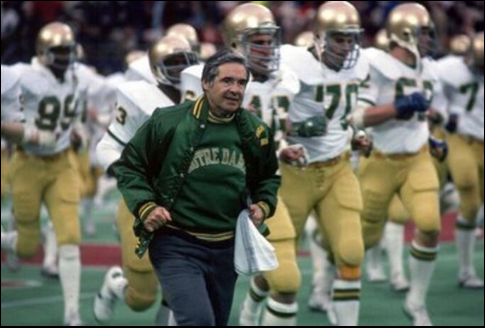
In today's high-pressure, portal-driven, NIL-era game, Devine's example resonates powerfully:
Stay the Course: He endured early criticism for not being "Ara" yet delivered results through consistency and belief.
Develop Talent: Turning Joe Montana into a legend and integrating top athletes shows the power of patience and culture.
Character First: His focus on making players better men aligns perfectly with Notre Dame's mission.
Clutch Performance: His teams thrived in big moments— a reminder that preparation meets opportunity.
For Fighting Irish fans, Devine teaches that true legacy isn't just wins—it's impact that endures.
How Does Marcus Freeman Compare?
Marcus Freeman, the dynamic young leader guiding the Irish today, shares intriguing parallels with Devine. Both took over programs with massive expectations—Freeman after Brian Kelly's departure, Devine after Parseghian. Both showed early promise: Devine's third year brought a title; Freeman has built steadily, with strong recruiting and competitive teams pushing toward playoff contention. Freeman's energy and player-first approach echo Devine's development focus, while his defensive acumen mirrors the toughness Devine instilled. Devine had 17 ranked wins in six seasons; Freeman has piled up impressive victories early. Both represent evolution—Devine on integration and sustainability, Freeman as a trailblazing figure in a modern landscape. If Freeman can channel Devine's resilience and deliver that elusive championship, he'll join him in the pantheon. The foundation Devine helped solidify makes Freeman's quest possible. Dan Devine wasn't flashy, but he was gold. He won it all, elevated those around him, and proved that quiet competence can roar on the biggest stages. As we cheer on the current Irish, let's tip our gold helmets to Coach Devine—the man who kept the legacy alive and thriving.
Go Irish!


Comments